
Floor framing and support
Crawl Space Structural Repair
Joists, beams and support posts carry your floors. When moisture or inadequate support compromises them, the repair belongs in the crawl space.
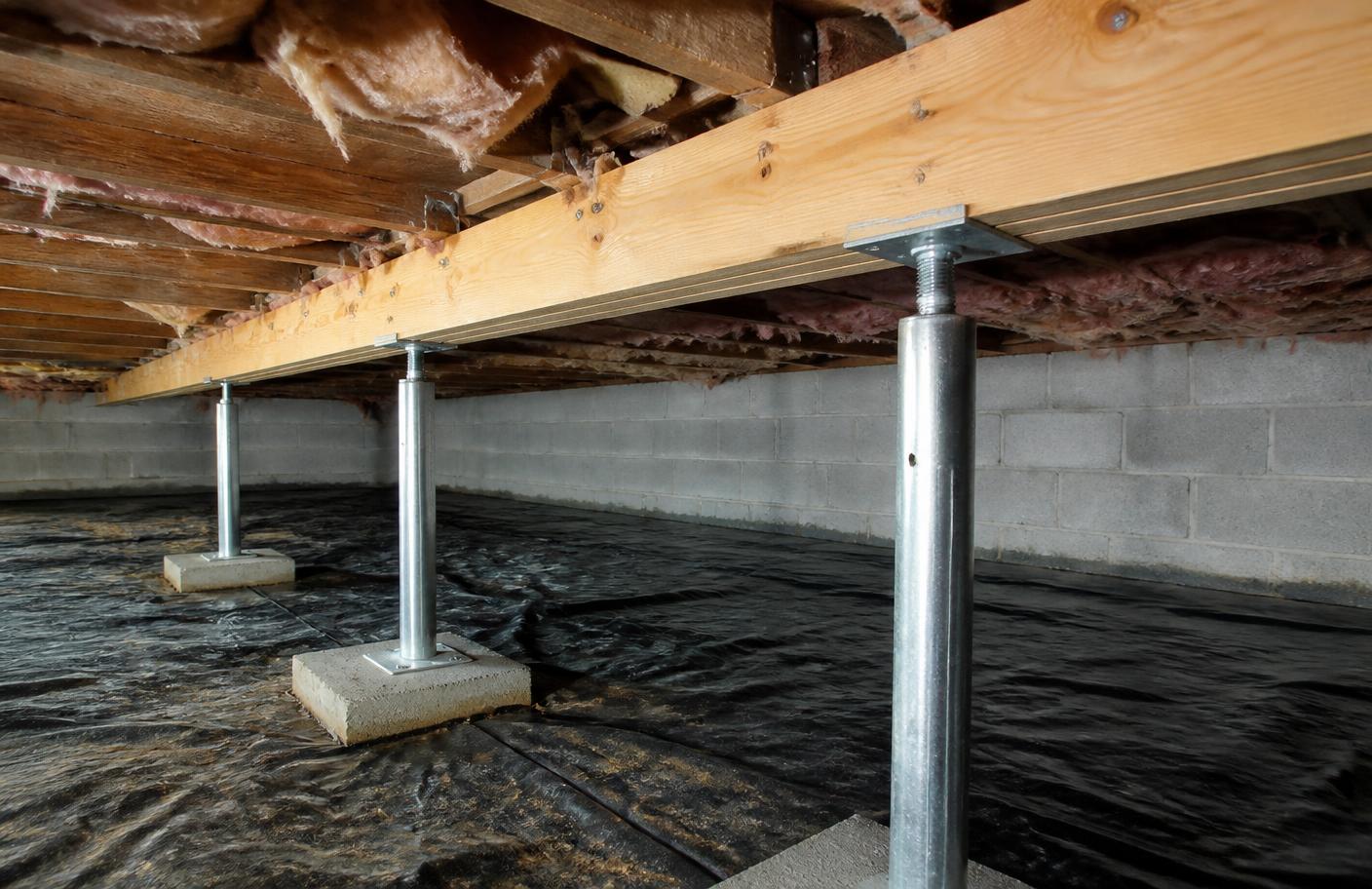
The floor system above a crawl space is a chain of components: subfloor, joists, girders or beams, support posts, and the footings under them. Damage or inadequacy anywhere in that chain shows up as movement upstairs. Because the cause can be moisture, span, support or a combination, structural work always follows an on-site evaluation — never a remote diagnosis.
Floor joists
Joists near the perimeter and above damp soil are the most exposed. Long-term high moisture can soften the wood, support decay organisms and reduce load capacity. Repairs range from sistering new lumber alongside the affected member to replacing damaged sections and correcting the moisture source that caused the problem.
Beams and girders
Girders carry multiple joists, so weakening here affects a wide area of floor. Splitting, crushing at bearing points, and deterioration where a beam meets a masonry pier are typical findings. Reinforcement, replacement of damaged sections and improved bearing details are all part of the toolkit.
Support posts and footings
We regularly find wood posts set directly on soil, stacked blocks used as temporary supports, undersized footings, or posts that no longer make contact at all. Permanent repairs use properly sized footings and adjustable or fixed posts installed to carry the actual load.
Wood deterioration and floor movement
Structural repair and moisture control belong together. Repairing framing while leaving the crawl space damp invites the same problem back. That is why structural work is normally paired with drainage, a ground vapor barrier and humidity control. If you are noticing movement in the floor itself, see sagging floor repair.
What we evaluate under your floor
Joist condition
Moisture readings, soundness, decay, insect damage and previous repairs.
Beam bearing
How girders bear on piers and posts, and whether that bearing is still adequate.
Support layout
Post spacing, footing size and whether temporary supports were left in place.
Subfloor
Delamination, staining and soft spots under finished flooring.
Moisture source
Water entry, exposed soil and humidity that caused the damage.
Learn moreRepair sequence
What has to be fixed before the space can be sealed.
Learn more
Structural Repair FAQs
Can you tell me over the phone whether my joists need replacing?
No, and we will not try. Framing condition has to be evaluated in person — wood that looks dark may be sound, and wood that looks acceptable can be soft under the surface.
Is a joist repaired or replaced?
Both are common. Localized damage is often addressed by sistering new material alongside the existing joist; extensive decay usually calls for replacement of the affected section.
Why do support posts fail?
Common reasons include posts sitting directly on soil, undersized or missing footings, wood posts that wicked moisture from the ground, and temporary supports that were never replaced with permanent ones.
Structural crawl space work by market
Request a Free Crawl Space Inspection
Send a few details about what you are seeing under your home and we will schedule a look at the crawl space. Pricing follows the inspection — not a phone estimate.
- • Free, no-obligation crawl space inspection
- • Recommendations based on the actual conditions we find
- • Written pricing for the work you decide to move forward with
Send the form and we will follow up to schedule your crawl space inspection.