
Crawl space contractor · statewide NC
Crawl Space Repair in North Carolina
Crawl space restoration for homes with moisture, water, damaged barriers or deteriorating wood — planned around what is actually happening under your floor.
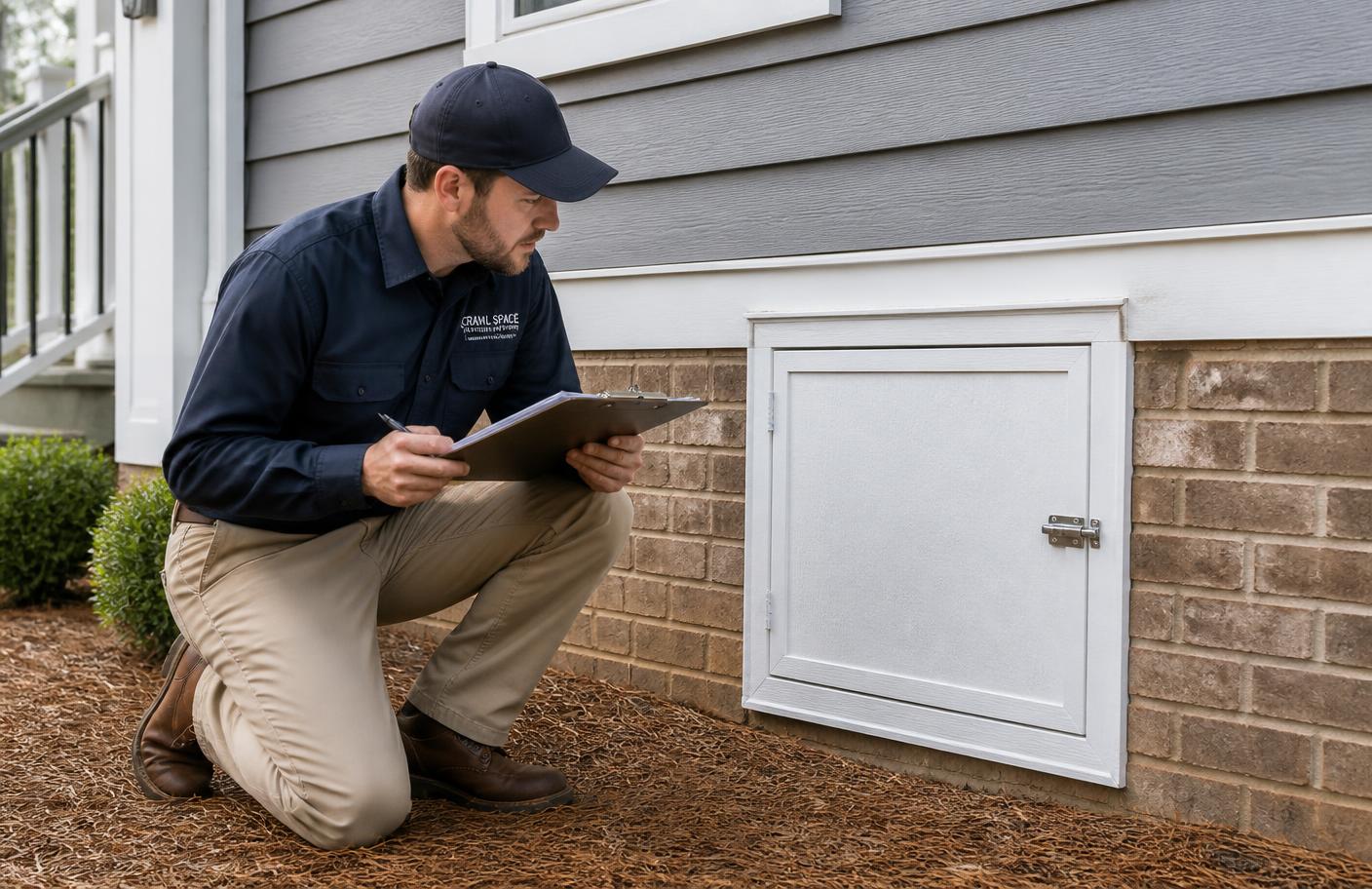
Crawl space repair covers a wide range of work, and the right scope depends entirely on the conditions found under the house. Two homes on the same street can need very different repairs: one may only need the ground covered and humidity controlled, while the next has water pooling against piers every time it rains.
Moisture: the problem behind most crawl space repairs
A bare dirt floor releases moisture into the crawl space continuously. In North Carolina's long humid season, vented crawl spaces also pull in warm outdoor air that condenses on cooler surfaces. The result is damp wood, damp insulation and air that finds its way into the home through floor openings and duct chases. Repairing a crawl space almost always means reducing the moisture load first — through ground cover, air sealing and dehumidification.
Damaged and failed vapor barriers
Many crawl spaces already have thin plastic on the ground. Over the years it tears, shifts, gets pushed aside by service work, or was never sealed at the seams. A liner that only covers part of the soil does very little. Replacing it with a heavier, properly lapped vapor barrier — or a full encapsulation system — is one of the most common repairs we perform.
Standing water and water entry
Water in the crawl space is a separate problem from humidity, and sealing the space will not fix it. Repairs focus on where the water comes from: roof runoff discharging beside the foundation, grading that slopes toward the house, and groundwater rising during storms. Interior drainage and a sump pump collect and discharge what still reaches the space. See crawl space waterproofing and drainage or our page on a wet crawl space.
Wood damage and structural repairs
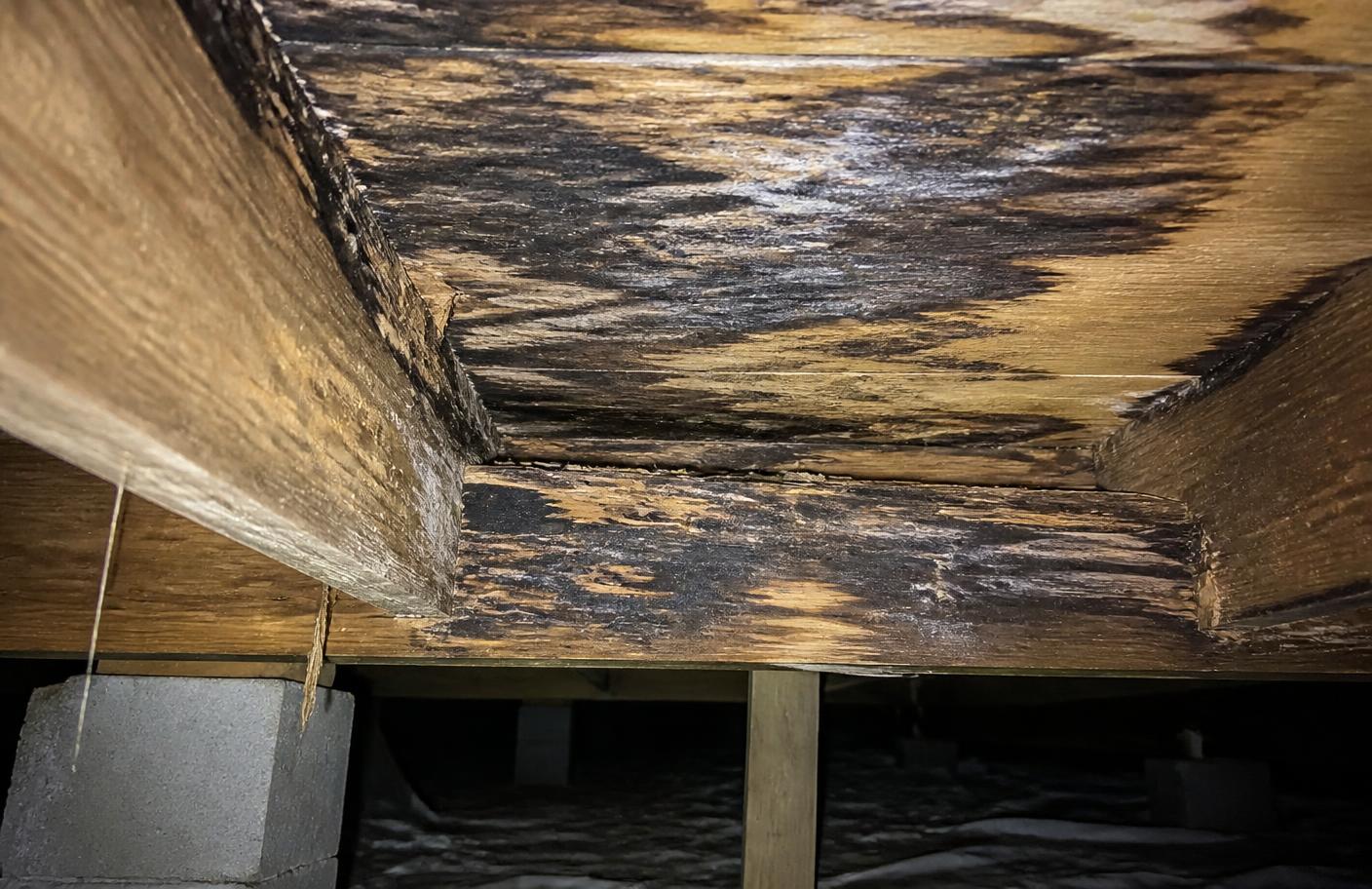
Sustained moisture takes a toll on framing. Sill plates, band joists, floor joists and girders can darken, soften and lose strength, and surface growth is common where humidity stays high. Insulation that has absorbed moisture falls out of the bays and holds dampness against the subfloor.
Repairs range from removing failed insulation and treating affected wood to sistering joists, reinforcing beams and adding or replacing support posts on proper footings. We do not diagnose structural failure remotely — those recommendations come only after we are under the house.
Related: crawl space structural repair and sagging floor repair.
What a crawl space repair plan usually covers
Scope is built from the inspection, in this order of priority.
1. Stop the water
Exterior corrections, interior drainage and a sump pump where water reaches the space.
Learn more2. Repair the wood
Failed insulation removed, damaged joists and beams repaired, support corrected.
Learn more3. Cover the ground
A heavy liner across the soil, lapped and sealed, walls covered where appropriate.
Learn more4. Control humidity
A crawl space dehumidifier sized for the sealed volume, with a reliable drain.
Learn more5. Verify conditions
Confirm the liner, drainage and humidity are performing as intended.
Learn moreKnow the pricing
Typical North Carolina ranges and the factors that move a project up or down.
Learn more
Crawl Space Repair FAQs
What does crawl space repair usually include?
It depends on what the inspection finds. Common scopes combine water management, a new ground liner, humidity control, removal of damaged insulation, and repairs to joists, beams or support posts.
How do I know my crawl space needs repair?
Musty odors in living space, humidity that stays high indoors, soft or bouncy floors, insulation falling down, visible water lines on piers, and darkened or damp framing are all reasons to have the space inspected.
Can I repair a crawl space in stages?
Often yes. Water entry and any unsafe framing come first; ground cover, air sealing and dehumidification can follow later if budget requires phasing.
Crawl space repair by North Carolina market
Request a Free Crawl Space Inspection
Send a few details about what you are seeing under your home and we will schedule a look at the crawl space. Pricing follows the inspection — not a phone estimate.
- • Free, no-obligation crawl space inspection
- • Recommendations based on the actual conditions we find
- • Written pricing for the work you decide to move forward with
Send the form and we will follow up to schedule your crawl space inspection.