
Water management
Crawl Space Waterproofing & Drainage
Water in a crawl space is a drainage problem, not a plastic problem. We trace where it comes from, then build a path for it to leave.
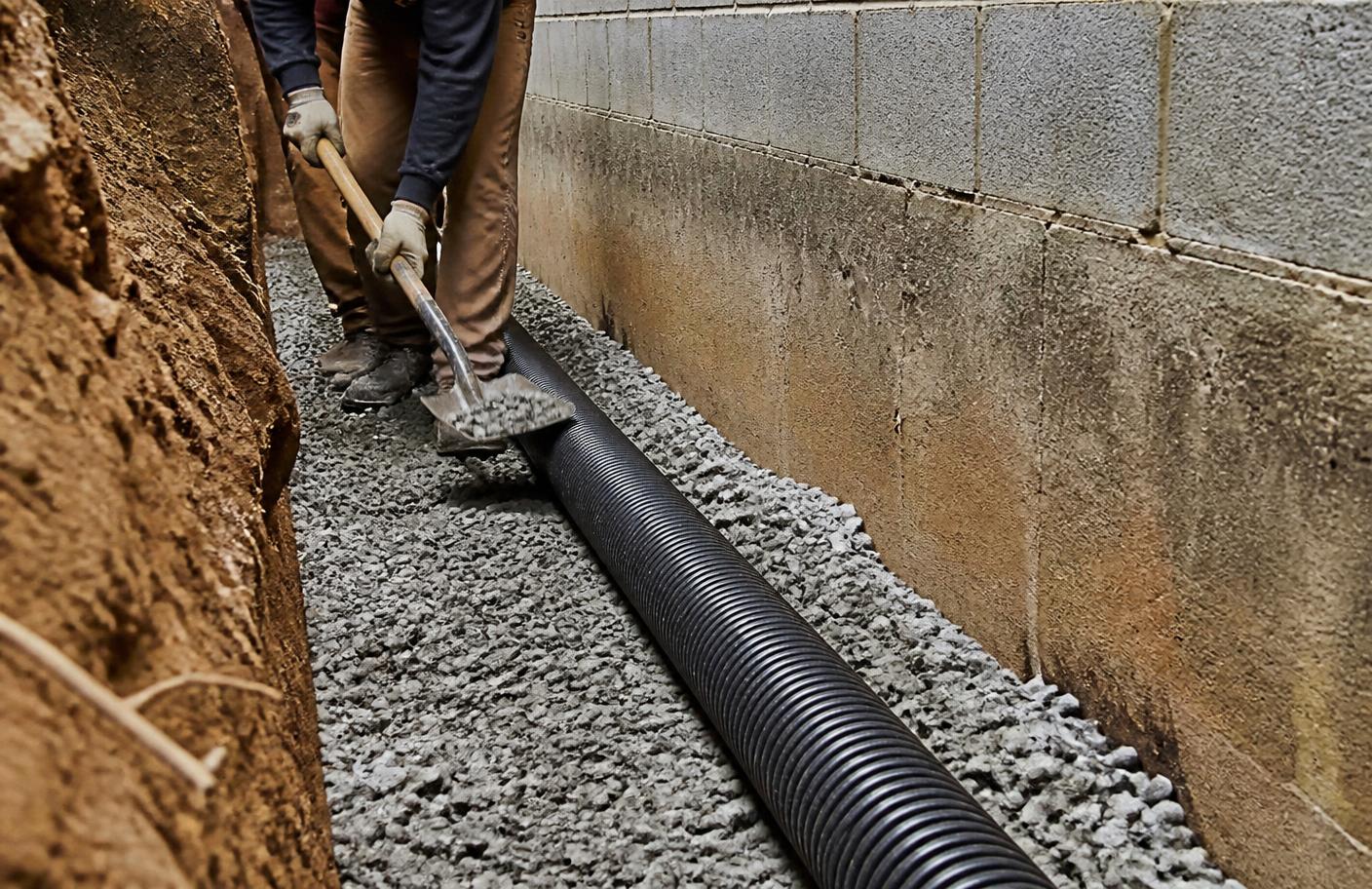
North Carolina gets intense rainfall. Tropical systems on the coast, summer thunderstorms in the Piedmont and fast mountain runoff in the west all deliver a large volume of water in a short time. When that water reaches a crawl space, the space becomes wet, the wood stays damp, and humidity climbs even after the ground looks dry again.
How water gets into a crawl space
- Downspouts discharging at the foundation instead of away from it
- Grading that slopes back toward the house, or flat ground with nowhere to shed water
- Runoff arriving from a neighboring slope, driveway or hillside
- Groundwater rising through the soil floor during and after storms
- Gaps at vents, access doors and below-grade penetrations
- Plumbing leaks and condensation from uninsulated lines
Exterior corrections come first
The cheapest water to manage is water that never reaches the house. Extending downspouts, correcting the first few feet of grade, and clearing blocked surface drains often reduces the volume substantially. We look at this before recommending anything inside.
Interior drainage and water removal
For water that still gets in, a perforated interior drain line set in gravel collects it at the lowest points and carries it to a basin. From there a sump pump discharges it away from the foundation. This is the core of crawl space water removal, and it is what keeps standing water from returning between storms.
Then seal and control humidity
Once water is managed, the ground can be covered and the space sealed — see encapsulation — and humidity held in range with a dehumidifier. Doing it in this order is what keeps the repair permanent instead of cosmetic.
A complete water management plan
Runoff control
Downspout extensions, surface grading and diversion away from the foundation.
Interior drain line
Perforated pipe in washed gravel routed to the lowest collection point.
Sump system
Basin, pump and discharge line sized for the volume reaching the space.
Learn moreSealed, dry space
Liner and humidity control once water is under control.
Learn more
Crawl Space Waterproofing FAQs
Why does water keep coming back into my crawl space?
Because the source has not changed. Roof water discharging beside the foundation, grading that slopes inward, and groundwater rising during storms all keep delivering water no matter how many times it is pumped out.
Do I need interior drainage or exterior work?
Often both. Exterior corrections reduce how much water arrives; interior drainage handles what still gets in. The inspection determines the balance.
Can standing water be removed the same day?
Water can usually be extracted quickly, but that is cleanup, not repair. Without drainage the space refills during the next heavy rain.
Water and drainage work by market
Request a Free Crawl Space Inspection
Send a few details about what you are seeing under your home and we will schedule a look at the crawl space. Pricing follows the inspection — not a phone estimate.
- • Free, no-obligation crawl space inspection
- • Recommendations based on the actual conditions we find
- • Written pricing for the work you decide to move forward with
Send the form and we will follow up to schedule your crawl space inspection.