
Sealed crawl space systems
Crawl Space Encapsulation in North Carolina
A sealed crawl space keeps ground moisture and humid outdoor air away from your floor system — and keeps the space usable, inspectable and dry.
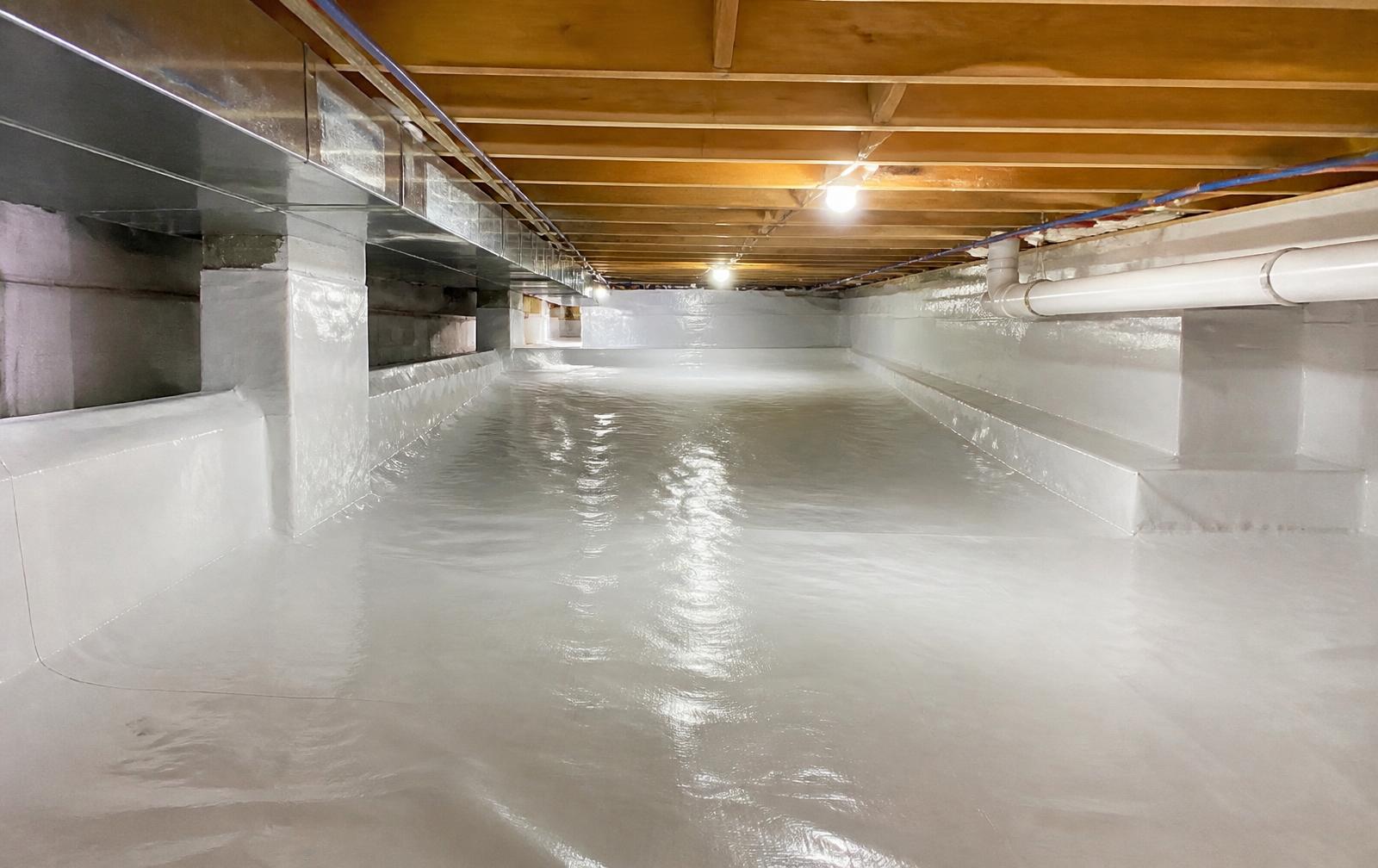
Crawl space encapsulation means separating the space under your home from two moisture sources: the soil below and the humid air outside. In North Carolina, both matter. Summer dew points stay high for months, and a vented crawl space over bare dirt has almost no defense against either one.
Ground vapor barrier
The foundation of every sealed crawl space is a heavy-duty liner installed across the entire soil area, lapped at seams and sealed, then fitted around piers. This is the single largest reduction in moisture load you can make. A thin, partial plastic sheet is not the same thing — see the vapor barrier comparison.
Wall sealing where appropriate
Where the foundation walls and construction allow, the liner is carried up the interior of the block or masonry wall and terminated below the sill. This is not appropriate in every crawl space — some walls, wood framing details or inspection requirements call for a termination point lower down, and we detail it accordingly during the inspection.
Air sealing
Vents, access doors and open penetrations bring outdoor air straight into the space. Sealing them is what turns a covered crawl space into a controlled one. Rim joist gaps, plumbing and electrical penetrations and poorly fitted doors are addressed as part of the work.
Drainage first, when water is present
If water enters during heavy rain, drainage comes before sealing. That may mean exterior corrections, an interior drain line and a sump pump. Encapsulation alone does not fix active water entry or existing structural damage, and we will say so plainly if that is what we find. Read more about waterproofing and drainage.
Humidity management in a sealed crawl space
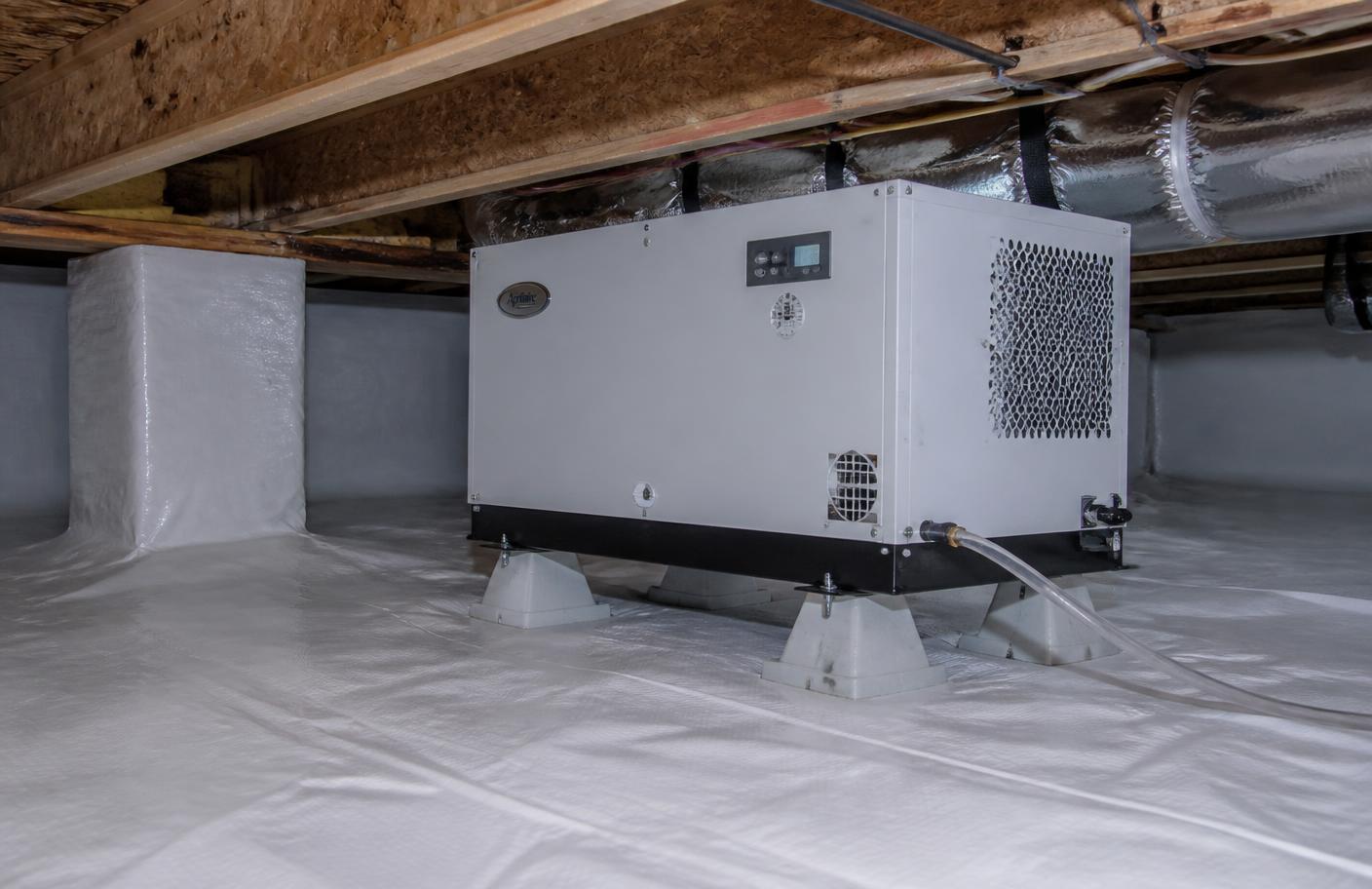
Once the space is sealed, humidity has to be managed mechanically. A crawl space dehumidifier sized to the volume, with a reliable condensate drain, holds relative humidity in a reasonable range through the worst of the Carolina summer.
Skipping this step is a common mistake. A sealed space with no humidity control can still hold moisture, especially in the first season after installation while the soil beneath the liner continues to dry. Learn more about crawl space dehumidifier solutions.
What encapsulation does and does not do
Setting expectations honestly is part of the job.
It reduces ground moisture
A sealed liner across the soil dramatically lowers the moisture entering the space.
It removes humid outdoor air
Sealed vents and openings stop humid summer air from condensing on cool surfaces.
It does not stop water entry
Surface water and groundwater need drainage and a pump, handled before sealing.
Learn moreIt does not repair damaged wood
Deteriorated joists, beams or posts are repaired before the space is closed up.
Learn more
Crawl Space Encapsulation FAQs
Does encapsulation fix water in a crawl space?
No. Encapsulation manages ground moisture and humid air. If water enters the crawl space, drainage and usually a sump pump must be handled first — otherwise water simply collects on top of the new liner.
Should crawl space vents be closed after encapsulation?
In a sealed crawl space, vents are typically closed or sealed so humid outdoor air is no longer being invited in, and humidity is managed mechanically instead.
How long does encapsulation last?
A properly installed heavy-duty liner is built to last many years. Service life depends on the material thickness, how well seams and penetrations were sealed, and whether anyone is dragging equipment across it.
Encapsulation across North Carolina
Request a Free Crawl Space Inspection
Send a few details about what you are seeing under your home and we will schedule a look at the crawl space. Pricing follows the inspection — not a phone estimate.
- • Free, no-obligation crawl space inspection
- • Recommendations based on the actual conditions we find
- • Written pricing for the work you decide to move forward with
Send the form and we will follow up to schedule your crawl space inspection.