
Problem: damp crawl space
Crawl Space Mold & Moisture Problems
Surface growth, damp wood and musty odors all point to the same underlying issue: the crawl space is holding more moisture than it can shed.
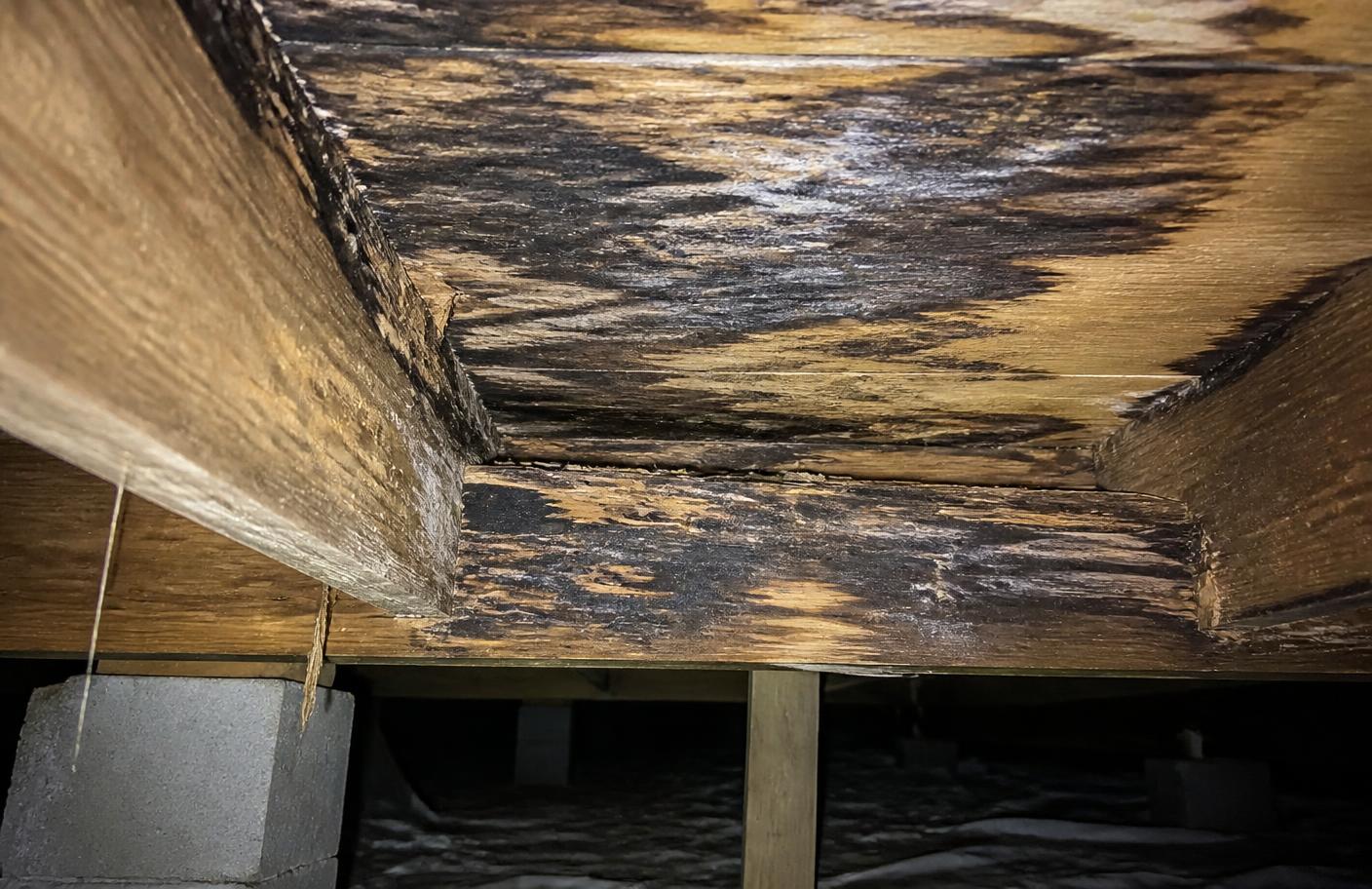
We are moisture control contractors, not health professionals, so this page sticks to what we can speak to: why crawl spaces get damp, what that dampness does to a house, and how it is corrected. If you have health concerns about indoor air quality, those questions belong with a medical professional or an indoor air quality specialist.
Common causes of crawl space moisture
Exposed soil
Bare ground releases moisture into the crawl space continuously. This is the single largest source in most homes, and it is why a ground vapor barrier is such an effective first step.
Standing water
Water on the crawl space floor keeps everything above it damp. It has to be addressed with drainage and often a sump pump. See wet crawl space repair.
Condensation
When humid outdoor air enters a vented crawl space and meets cooler ductwork, plumbing or block walls, moisture condenses out of the air onto those surfaces. In North Carolina this happens for months at a time.
High humidity
Damp air alone is enough to keep wood moisture elevated even with no visible water. Once the space is sealed, a crawl space dehumidifier keeps humidity in a reasonable range.
Wood moisture
Joists, beams and subfloor absorb moisture from the air around them. Elevated wood moisture over long periods is what allows decay organisms and surface growth to take hold, and it eventually leads to structural repair.
Poor drainage
Downspouts discharging at the foundation, grading that slopes inward, and blocked drains all keep delivering water to the perimeter of the house.
How the problem gets corrected
Encapsulation
Seal the ground and space so moisture stops entering.
Learn moreVapor barrier
Cover exposed soil — the largest single moisture source.
Learn moreDehumidifier
Control humidity in the sealed space year-round.
Learn moreWet crawl space repair
Remove and prevent standing water first.
Learn more
Warning signs to look for
You do not need to crawl under the house to notice most of these.
- Musty odor near floor vents, closets or the crawl space door
- Visible dark staining or growth on joists and subfloor
- Insulation drooping or lying on the ground
- Water droplets on ducts or metal surfaces under the house
- Elevated indoor humidity that HVAC alone does not fix
- Hardwood floors cupping above the crawl space
Crawl Space Mold & Moisture FAQs
Why does growth keep coming back after cleaning?
Because the moisture that supported it is still there. Surface treatment without correcting humidity, water entry or exposed soil is temporary by definition.
Does a musty smell in the house come from the crawl space?
Frequently. Air moves from the crawl space into living space through floor penetrations, duct chases and openings around plumbing, carrying odors with it.
How do you decide what treatment is needed?
By inspecting the space: how much surface is affected, how wet the wood is, whether water is entering, and what condition the framing is in. Then moisture control is designed around those findings.
Moisture control by market
Request a Free Crawl Space Inspection
Send a few details about what you are seeing under your home and we will schedule a look at the crawl space. Pricing follows the inspection — not a phone estimate.
- • Free, no-obligation crawl space inspection
- • Recommendations based on the actual conditions we find
- • Written pricing for the work you decide to move forward with
Send the form and we will follow up to schedule your crawl space inspection.