
Humidity control
Crawl Space Dehumidifier Solutions
A dehumidifier is what holds a sealed crawl space at a stable humidity through a North Carolina summer — once the moisture sources have been addressed.
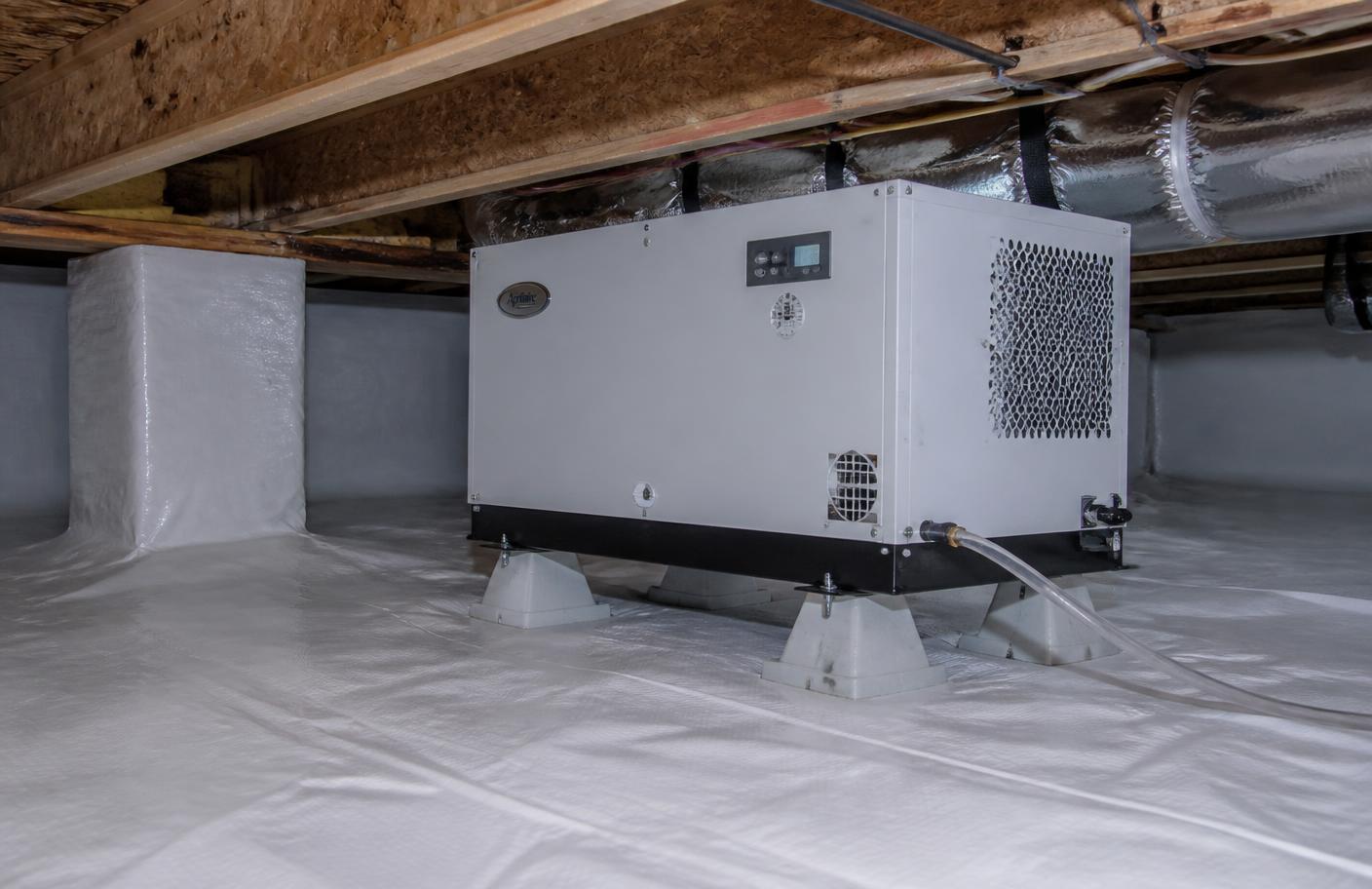
North Carolina summers run humid for months at a time. In a vented crawl space, that outdoor air moves under the house and condenses on any surface cooler than the dew point — ducts, plumbing, block walls and the underside of the subfloor. A dehumidifier in a still-vented crawl space is fighting the outdoors. In a sealed space, it is a genuinely effective control.
Humidity control, not water removal
Dehumidification manages air. It does not manage liquid water or soil vapor. That is why we address the moisture source first: drainage for water entry, a ground vapor barrier for exposed soil, and encapsulation to seal the space. The dehumidifier then has a reasonable job to do instead of an impossible one.
Sizing
Units are selected for the sealed volume of the crawl space and the moisture load it carries. Undersized equipment runs constantly and never reaches target. Oversized equipment short-cycles and wastes energy. Ceiling height, square footage, how well the space is sealed and whether drainage work was needed all factor into the selection.
Condensate drainage
A crawl space dehumidifier produces water continuously and needs a permanent drain path — gravity to a suitable outlet, into a sump basin, or through a condensate pump where no gravity route exists. A unit that drains onto the liner defeats the purpose.
Maintenance
- Clean or replace the filter on the manufacturer's schedule
- Confirm the condensate line is flowing and not blocked
- Check the humidity reading periodically, especially the first summer
- Look for new condensation on ducts or piping, which suggests the setpoint or sizing is off
Signs your crawl space humidity is too high
Humidity problems usually announce themselves upstairs before anyone opens the crawl space door.
- Musty odor in hallways, closets or near floor registers
- Indoor humidity that stays high even with the HVAC running
- Condensation on ductwork or plumbing under the house
- Insulation sagging or falling out of the joist bays
- Surface growth on joists and subfloor
- Cupping or buckling in hardwood floors above the crawl space
If any of these sound familiar, see crawl space mold and moisture problems.
Crawl Space Dehumidifier FAQs
What humidity level should a crawl space hold?
Most sealed crawl spaces are managed to keep relative humidity comfortably below the point where condensation and surface growth become likely — commonly a target in the mid-50s percent range, adjusted for the home.
Can I use a household dehumidifier in a crawl space?
Portable room units are not designed for crawl space temperatures, dust or unattended operation, and they need someone to empty a bucket. A crawl space unit drains continuously and is built for the environment.
Will a dehumidifier fix a wet crawl space?
No. A dehumidifier removes moisture from air, not water from the ground. Standing water and exposed soil have to be handled separately or the unit runs constantly and still loses.
Humidity control across North Carolina
Request a Free Crawl Space Inspection
Send a few details about what you are seeing under your home and we will schedule a look at the crawl space. Pricing follows the inspection — not a phone estimate.
- • Free, no-obligation crawl space inspection
- • Recommendations based on the actual conditions we find
- • Written pricing for the work you decide to move forward with
Send the form and we will follow up to schedule your crawl space inspection.