
Water removal under the house
Crawl Space Sump Pump Installation
When water reaches the crawl space, a sump system gives it somewhere to go — automatically, during the storm, not days later.
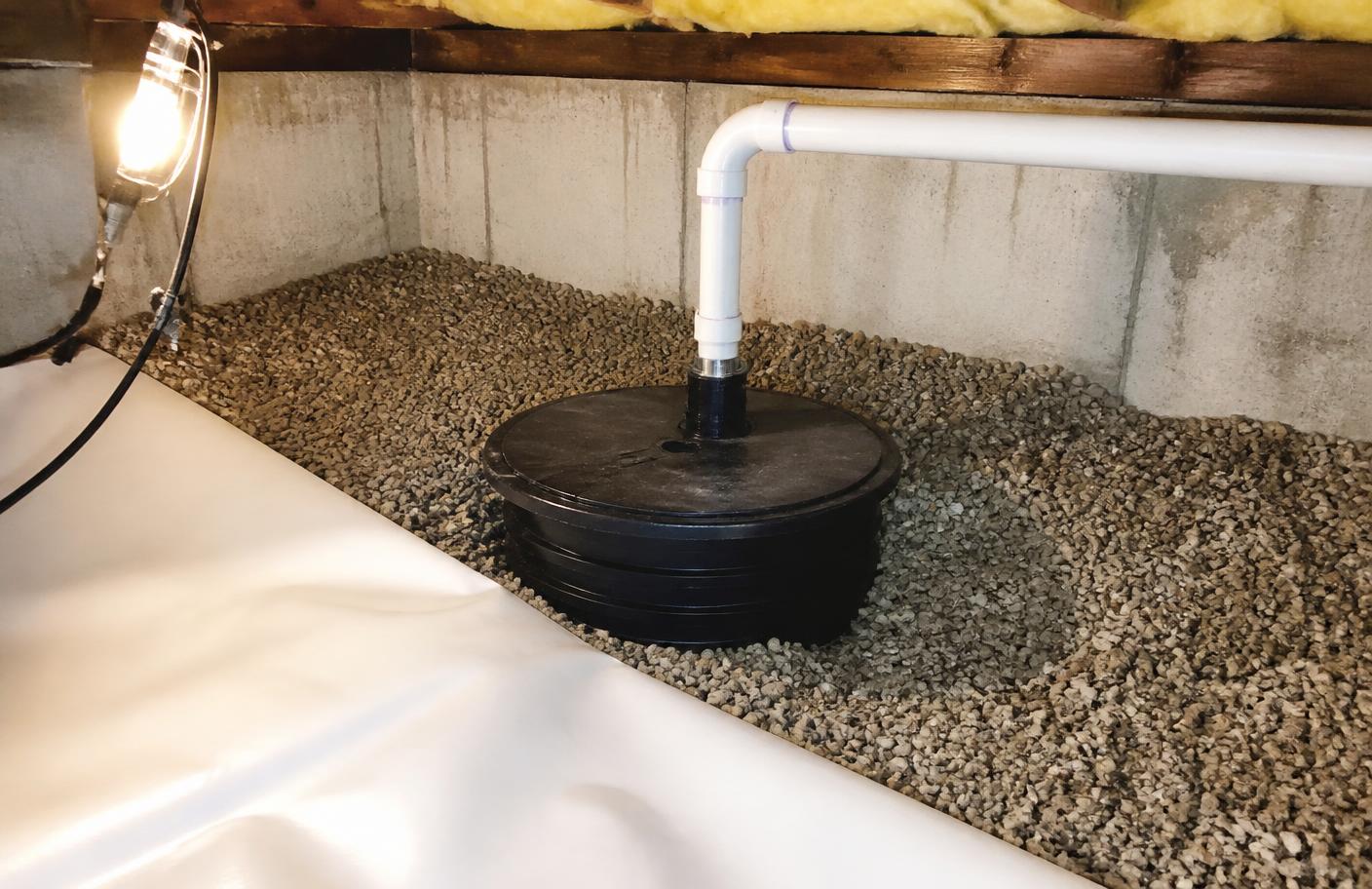
A sump pump under a house is the last stage of a drainage system. Water is collected by an interior drain line, delivered to a basin at the low point of the crawl space, and pumped out through a discharge line that carries it away from the foundation. Without the collection side, a pump sits in a hole and does very little; without the pump, a drain line has nowhere to send water on a flat lot.
When a crawl space sump pump makes sense
- Standing water appears after heavy or prolonged rain
- Groundwater rises into the crawl space seasonally
- The lot is flat and there is no gravity outlet for a drain line
- Exterior grading and downspout corrections have not fully solved the problem
- Water lines or silt marks are visible on piers and foundation walls
How we install it
The basin is set at the lowest practical point, bedded in washed gravel and tied into the interior drain line. The pump is selected for the volume the space actually sees, wired to a dedicated circuit where required, fitted with a check valve, and run to a discharge point that follows the lot's drainage rather than fighting it. A sealed basin lid keeps the system from adding humidity back into a sealed crawl space.
Pair it with the rest of the system
A pump manages liquid water. It does nothing for soil vapor or humid summer air, so it is normally installed as part of a plan that also includes a ground vapor barrier or full encapsulation, plus a dehumidifier for the sealed space. If your crawl space is currently wet, start with wet crawl space repair.
Backup and reliability considerations
Pumps fail at the worst possible time — during the storm that needed them.
- Dedicated circuit rather than a shared extension cord
- Check valve to keep discharged water from draining back
- Sealed lid so the basin does not humidify a sealed crawl space
- Discharge routed far enough out to prevent recirculation
- Optional battery backup where outages are common during storms
- Accessible basin location so the pump can actually be serviced
Crawl Space Sump Pump FAQs
Does every crawl space need a sump pump?
No. A pump is for homes where water actually reaches the crawl space. If the only issue is humidity or exposed soil, a liner and dehumidifier are the right tools instead.
Where does the discharge water go?
To a point far enough from the foundation that it does not return — following the lot's slope and local requirements. A discharge line that dumps beside the house recycles the same water.
What maintenance does a sump pump need?
Periodically confirm the pump cycles, the float moves freely, the basin is free of silt and the discharge line is clear. Pumps are mechanical and eventually wear out.
Sump pump installation by market
Request a Free Crawl Space Inspection
Send a few details about what you are seeing under your home and we will schedule a look at the crawl space. Pricing follows the inspection — not a phone estimate.
- • Free, no-obligation crawl space inspection
- • Recommendations based on the actual conditions we find
- • Written pricing for the work you decide to move forward with
Send the form and we will follow up to schedule your crawl space inspection.