
Ground moisture control
Crawl Space Vapor Barrier Installation
Exposed soil is a constant moisture source. A properly installed ground vapor barrier is the most cost-effective first step in most North Carolina crawl spaces.
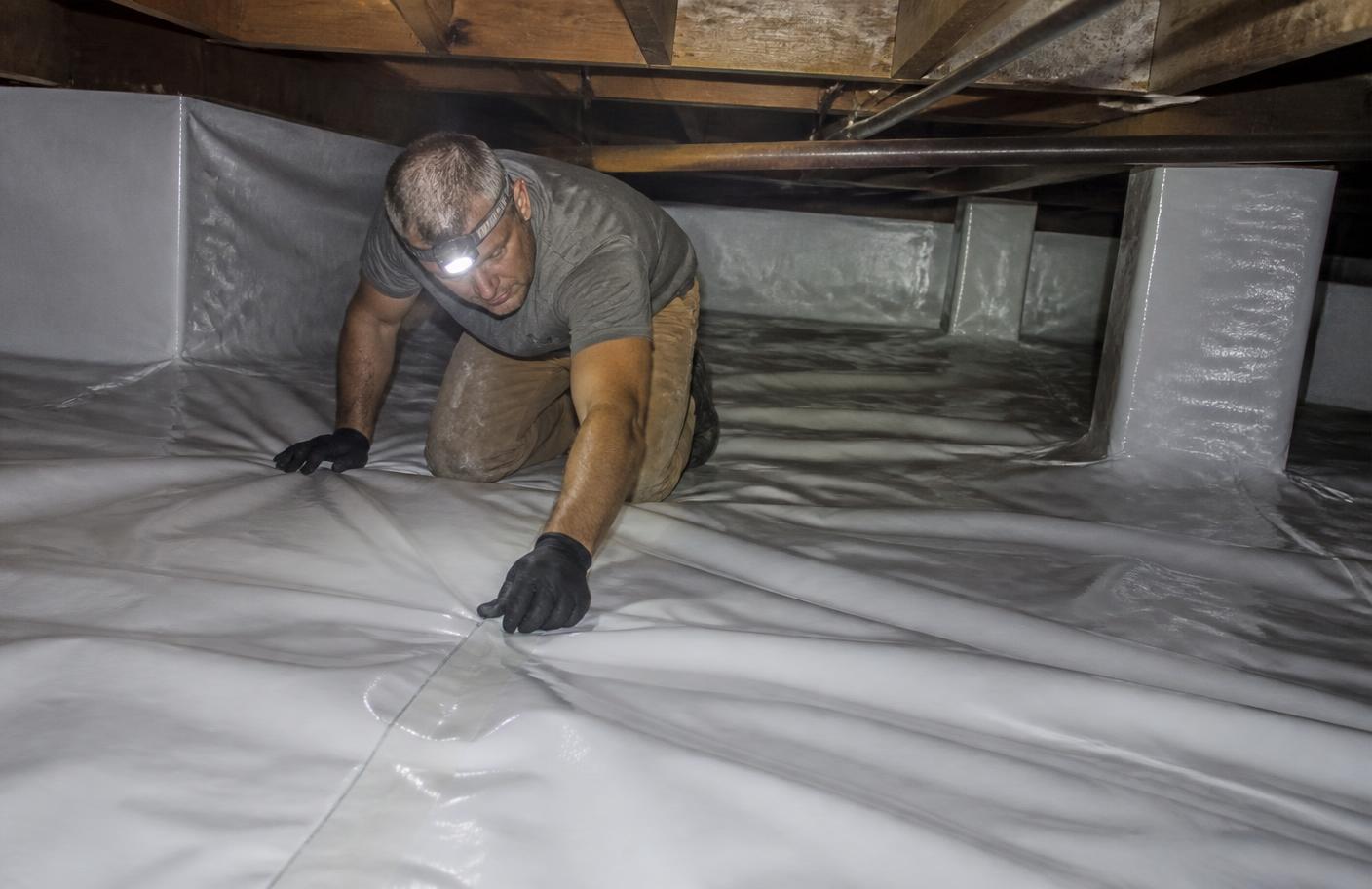
Soil under a house is rarely dry. Moisture moves out of the ground and into the crawl space air continuously, day and night, all year. A vapor barrier — sometimes called a moisture barrier, ground vapor barrier or crawl space plastic — is a sheet material laid over the soil to slow that movement dramatically.
What a good installation looks like
- Old, torn plastic and debris removed before installation
- Full soil coverage, including tight corners and areas behind piers
- Generous overlaps at seams, taped or sealed rather than simply laid together
- Neatly fitted around piers, footings and plumbing penetrations
- Material heavy enough to survive being walked on during future service work
Vapor barrier vs. full crawl space encapsulation
These terms get used interchangeably, but the scope is different, and so is the result.
Basic vapor barrier
Covers the ground only. Slows soil moisture. Does not address humid outdoor air entering through vents, does not seal the foundation walls, and does not include humidity control. Appropriate when the crawl space is otherwise dry and the main complaint is bare dirt.
Full encapsulation
Extends the liner up the foundation walls where appropriate, seals seams, penetrations, vents and access points, and pairs the system with dehumidification and drainage where the conditions call for it. This is the right approach when humidity, condensation, musty odors or damp wood are already present. See crawl space encapsulation.
When a barrier is not the answer yet
If water pools under the house after rain, plastic on the ground will simply hold it. Water entry is corrected first — see wet crawl space repair. If framing has already deteriorated, that work comes before the space is covered.
Signs your existing barrier has failed
Most homes we visit already have something on the ground. Very few have something that is still working.
- Bare soil visible between or beside sheets of plastic
- Plastic pushed aside around piers, ducts or plumbing
- Tears and punctures from previous service visits
- Condensation or standing water on top of the plastic
- Sheets that were never overlapped or sealed at the seams
- Very thin material that flexes and rips when handled
Vapor Barrier FAQs
How thick should a crawl space vapor barrier be?
Builder-grade plastic is often very thin and tears easily. Repair-grade liners are considerably heavier and reinforced so they survive foot traffic and service work. We select thickness based on how much the space is accessed.
Is a vapor barrier enough, or do I need encapsulation?
A ground barrier alone helps when the only issue is exposed soil in an otherwise dry, reasonably ventilated crawl space. Where humidity, condensation or damp wood are already present, a sealed system with humidity control performs better.
Can a vapor barrier be installed over an old one?
Usually the old material is removed. Trapping debris, torn plastic and damp insulation under a new liner makes future inspection harder and gains nothing.
Vapor barrier installation across North Carolina
Request a Free Crawl Space Inspection
Send a few details about what you are seeing under your home and we will schedule a look at the crawl space. Pricing follows the inspection — not a phone estimate.
- • Free, no-obligation crawl space inspection
- • Recommendations based on the actual conditions we find
- • Written pricing for the work you decide to move forward with
Send the form and we will follow up to schedule your crawl space inspection.