
Floor support
Sagging Floor Repair in North Carolina
Soft spots, bounce, slopes and doors that stick often trace back to the crawl space. We start where the support actually lives.
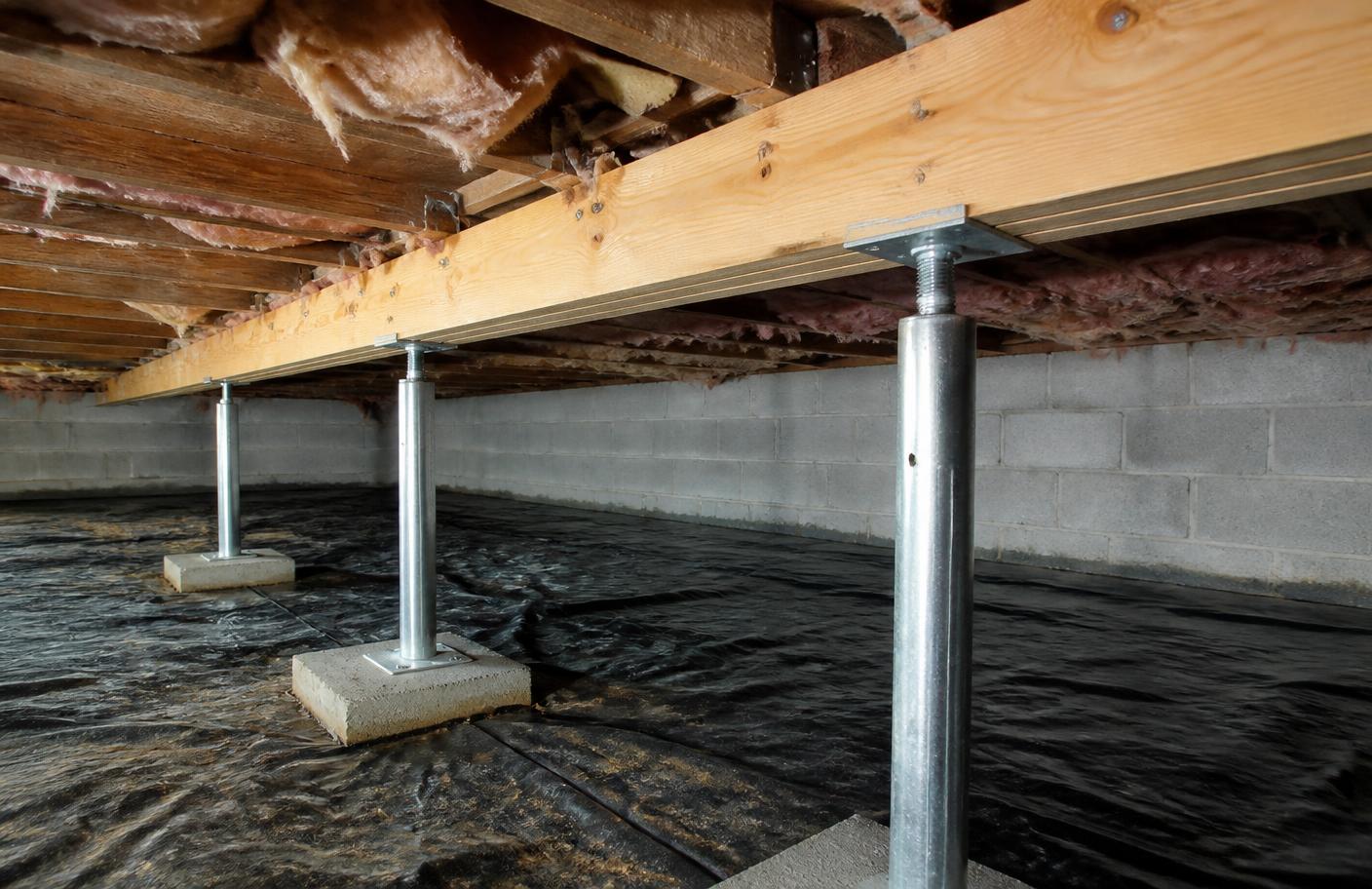
Homeowners usually describe the same handful of symptoms: one room feels springy, a hallway has a dip, furniture rocks, tile grout cracks in a line, or an interior door binds at the top. Those are signs the floor system is moving. The reason is almost always below.
Possible causes of a sagging floor
- Moisture damage — sustained dampness softening joists, beams and subfloor over years
- Damaged joists — decay, insect damage, or joists notched and cut for plumbing and HVAC
- Weakened beams — split girders or crushed bearing points at piers
- Poor support — too few posts, undersized footings, wood posts on bare soil, or temporary supports never replaced
- Settlement — footings that have moved, changing how load is carried
We do not guess between these from a description. The evaluation happens under the house, with moisture readings and a look at how the load is actually being carried.
How the repair works
Once the cause is identified, the repair usually combines support corrections — new footings, properly sized posts, beam reinforcement — with repair or replacement of damaged framing. Support is adjusted carefully rather than all at once, because finished floors, drywall and trim above need time to respond.
Fix the moisture, or repeat the repair
If dampness caused the damage, the crawl space environment has to change too. That means water management, a ground vapor barrier or full encapsulation, and humidity control. Related work: crawl space structural repair and general crawl space repair.
Warning signs worth an inspection
Floor movement rarely improves on its own — and moisture-driven damage progresses.
- Noticeably bouncy or springy floors
- A visible dip or slope in one area
- Gaps opening between floor and baseboard
- Cracked tile or grout in a straight line
- Interior doors that stick or no longer latch
- Squeaks that have become louder over time
Sagging Floor Repair FAQs
Are sagging floors always a structural problem?
Not always. Some floors feel soft because of long spans and minimal support that were built that way; others sag because joists or beams have been damaged. The inspection separates the two.
Can a sagging floor be leveled?
Support can often be corrected and floors improved, sometimes substantially. How much movement can be recovered depends on the framing, finishes and how long the condition has existed.
Do I need to remove flooring for the repair?
Usually not. Most floor support repairs are performed from inside the crawl space, below the finished floor.
Floor support repair by market
Request a Free Crawl Space Inspection
Send a few details about what you are seeing under your home and we will schedule a look at the crawl space. Pricing follows the inspection — not a phone estimate.
- • Free, no-obligation crawl space inspection
- • Recommendations based on the actual conditions we find
- • Written pricing for the work you decide to move forward with
Send the form and we will follow up to schedule your crawl space inspection.